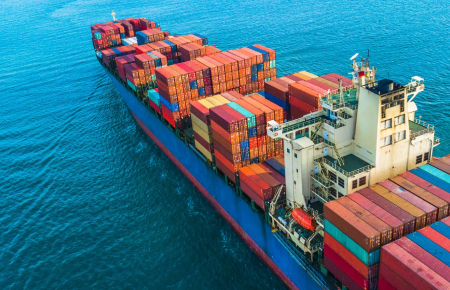
Sea freight gives businesses a way to move commercial cargo between international markets without treating every shipment as an urgent air movement. The right arrangement depends on the volume of goods, the trade route and the date the cargo is needed at its final destination.
VS Pro Logistics coordinates ocean freight as part of its freight forwarding and multimodal logistics services. Share the full journey with our team—from the collection location to the receiving address—so the sea movement, customs coordination and inland transport can be discussed together.
What are ocean freight services?
Ocean freight is the transportation of goods by sea. For many businesses, the vessel journey is one part of a wider plan that also includes collection, origin handling, documentation, destination handling and final delivery.
A useful shipping plan makes these responsibilities clear before booking. A port-to-port quotation, for example, covers a different scope from a shipment that also needs warehouse collection and delivery to a customer’s premises. Confirm which parts of the journey are included rather than comparing the headline freight charge alone.
FCL or LCL: which option fits your cargo?
Full container load (FCL)
FCL gives a shipper dedicated use of a container rather than sharing it with unrelated consignments. It may suit larger volumes or goods that benefit from a dedicated container arrangement.
The decision is about more than filling a container completely. Consider packaging, loading space, weight, handling preferences and the overall quotation. Ask the transport team to confirm the container and equipment appropriate for the shipment.
Less than container load (LCL)
LCL combines separate shippers’ consignments within a shared container. It can be a practical option when your cargo does not justify a dedicated container.
Allow for the work needed to consolidate cargo at origin and separate it at destination. Ask where the goods will be received, how they should be packed and which handling stages are included. The best choice depends on the actual shipment, rather than a fixed volume rule applied to every route.
Information needed for an ocean freight quote
A detailed enquiry gives the freight team a clearer basis for checking options. Include:
- Collection and delivery addresses, plus preferred ports if already agreed.
- Cargo description, package count and packaging type.
- Gross weight, packed dimensions and estimated volume.
- Cargo-ready date and required arrival window.
- Whether you need FCL, LCL or advice comparing both.
- The agreed delivery terms and any pickup, clearance or final-delivery requirements.
- Details of oversized, fragile, temperature-sensitive or other special cargo.
Send dimensions for the packed goods, not only the products inside. If the cargo changes before booking, tell the team so the proposed arrangement can be checked again.
Plan the complete journey before booking
1. Define the handover points
Agree where the transport service starts and ends. Identify who is arranging collection, who provides the shipment information and who is coordinating with the receiving business. Clear handovers help prevent a missing step between the warehouse and the port.
2. Check schedules and deadlines
Ask about the proposed sailing, cargo acceptance deadline and expected arrival window. Distinguish the vessel’s transit time from the time needed for the complete movement. A planned arrival at a port is not the same as a confirmed delivery appointment at a warehouse.
3. Prepare the cargo and information
Check packaging, marks, package counts and the details supplied for the shipment. Discuss any handling constraints early. Make sure the people preparing the commercial information and the people dispatching the goods are working from the same final shipment details.
4. Prepare for arrival
Before the cargo reaches its destination, confirm the receiving contact, onward transport requirement and any storage arrangements. Ask which destination charges are included in the quotation and which need separate confirmation.
Connecting ocean freight with road and air services
Sea freight often needs a road movement before or after the international journey. VS Pro Logistics also advertises road transportation and warehouse booking, allowing these requirements to be discussed alongside the ocean leg.
Explore our road freight services if you need collection or inland delivery. If the required date is too close for the proposed sea movement, discuss air freight services as an alternative for suitable cargo.
Frequently asked questions
Is ocean freight always cheaper than air freight?
Compare quotations for your actual cargo and the complete service scope. The decision should consider the delivery requirement, handling, collection, destination costs and any storage needs—not just the main transport charge.
Can I ship goods without booking a whole container?
LCL may be suitable for smaller consignments. Ask the team to confirm availability, cargo suitability and the origin and destination arrangements for your route.
How long will an ocean shipment take?
Request a route-specific estimate covering the stages you need. Ask whether it refers to port-to-port transit or the full journey, and allow for the agreed collection and destination processes.
Which documents should I prepare?
The documents depend on the goods, countries and transaction. Share the shipment details early so the documentation requirements can be checked before cargo is dispatched.
Does a freight quote include every destination charge?
Do not assume it does. Ask for a written breakdown of included services, excluded charges and responsibilities at both ends of the journey.
Request an ocean freight quote
Send VS Pro Logistics your cargo details, origin, destination, cargo-ready date and required delivery window. Tell us whether you need port-to-port shipping or coordination of additional logistics activities.
Request an ocean freight quote or email info@vsprologistics.com to discuss the shipment.
Leave a Reply